Tuesday, July 5, 2011

Great Names in Baseball: Cupid Childs


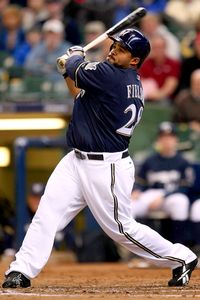
Baseball fans loves fat guys. Maybe fans identify better with them because heavier players look more like common American slobs than the sculpted superstars whose strength is not shrouded by extra heft. Clarence "Cupid" Childs was one such player. But unlike modern heavyweights such as pitcher Ray King or first baseman Prince Fielder, Childs played a more physically demanding position: second base.

He was agile enough to stay at the position for his entire career and round enough as a kid to be called "Cupid." He played mostly in the 1890s and made an appearance in the first couple years of the new century. At 5'8" and 185 lbs., Childs was among the heavier players of the era. While this is about average for a modern ballplayer, the turn of the century saw players who were typically toothpick-thin. That Childs was fleet enough to steal 269 bases in his career is a testament to his athleticism.

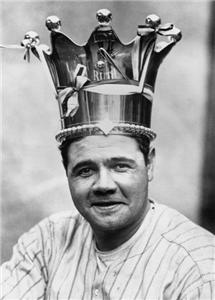
Childs' never hit with the power of the biggest big man of all, Babe Ruth. Rather, at his peak with the Cleveland Spiders1 in the 1890s, Childs was a patient hitter who averaged nearly a walk per game while batting in the low-to-mid .300s. His career .416 on-base percentage ranks 24th all-time, but Childs' decline in his final four years brought that number down. In his prime seasons of 1892-1894, he drew 344 walks while striking out only 43 times.

Childs was moved to the St. Louis Perfectos in 1899, as both St. Louis and the Spiders were owned by the Robison Brothers, who saw ownership of both clubs as a way to slide good players to one team to be competitive. And while the Perfectos went 84-67 that season, they finished a disappointing fifth in a competitive league2. And Childs missed part of the season with malaria. Yes, Cupid got malaria3.

Childs found himself with the Chicago Orphans in 1900, but he was never the same player again. After a disappointing season-and-a-half, the Orphans orphaned Cupid. Cupid played for a bevy of minor-league clubs until 1904. He went to work as a coal driver in Baltimore after that, but Cupid died bankrupt in 1912 of Bright's Disease. He was only 45.

His career was overlooked by the Hall of Fame. They only like fatties who were media darlings, apparently.


1 Cleveland Spiders is probably a better mascot than their current one, which is probably the most offensive mascot in all of sports. They've only gotten away with it because they play in Cleveland, which no one cares about.
2 It may be noted that the 1899 Cleveland Spiders were terrible, winning only 20 games all year. The Spiders folded at season's end.
3 Someone please make a Photoshop of this sentence. If you don't, I may have to make an MS Paint mashup3A.
3A By the way, a Google image search of "cupid malaria" brings up photos of Cupid Childs. So I guess he's famous for something, even if it isn't Hall of Fame worthy.

Friday, July 1, 2011

Great Names in Baseball: Dad Clarkson


Professional baseball has always had its share of related players. From Hall of Fame brother duos like Paul and Lloyd Waner1 to father-son pairings like The Griffeys to multi-generational sets like the Boones, families have contributed to the game's rich history.
The late 1800s and early 1900s saw a trio of Clarkson boys, all of whom pitched in the majors with very different results. The oldest, John Clarkson, was an 1880s superstud for the Chicago White Stockings2 and the Boston Beaneaters, winning as many as 53 games in a season. The youngest, Walter Clarkson, threw for the New York Highlanders and for the Cleveland Naps3 in the 1900s, but he never found lasting success in the big leagues.

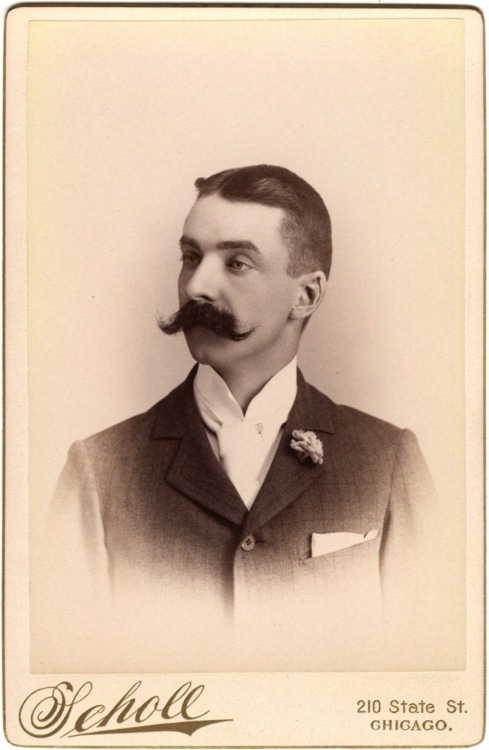
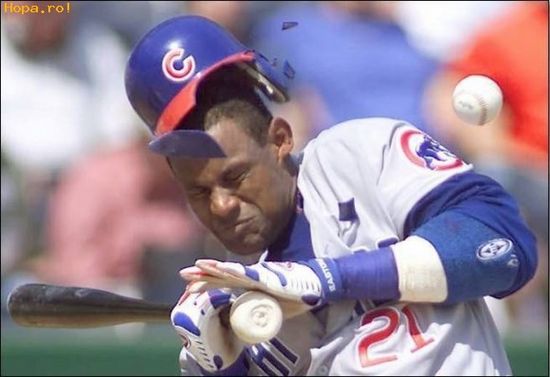
In between them came Arthur Clark(e)son, more famously known as Dad Clarkson. The moniker strikes one as odd, since he wasn't even the oldest of the pitching brothers. Because I can't find any results regarding his nickname on the first two pages of the Google search I did, I think it's only fair to start the rumor that he had more than 75 illegitimate children in each of the many cities of the National League4. When Dad's ol' team rolled into town, he'd spend his meager per diem on a section of bleachers for the children. Dad stopped by the section before his starts to promise to bean the hometown team's superstar if one of them would be a darling runt and fetch him a fifth of "Pitcher's Tonic" and the finest toothache drops the closest pharmacy offered. The only time the children were ever happy was when good ol' Dad planted one off Hugh Duffy's forehead. And when Duffy came to, he never once thought of fisticuffs, for although Dad Clarkson was a scrawny chap, men and [Dad's] children alike understand the rule that a serious mustache is not to be trifled with5.

The end.

Oh wait, I didn't even talk about Dad's actual career. In six seasons, Clarkson pitched for four different teams, finishing his major league career with 39 wins and 39 losses. While never an ace, he pitched respectably as a fourth starter on the 1893 St. Louis Browns and on the pennant-winning 1895 Baltimore Orioles, where he likely pitched to Boileryard Clarke at least once. His big-league career ended in 1896, though he reappeared in 1900 as a member of something called the Anaconda Serpents6 in the obscure and likely dangerous Montana State League7.

Dad Clarkson lived in the shadow cast by his Hall of Fame brother John Clarkson, although Dad outlived him by a year. And while John's legacy of masterful pitching is enshrined in Cooperstown, Dad Clarkson's millions of living descendents still cry a tear of joy anytime a hitter is beaned in anger.


1 It's worth noting that the Waners had pretty awesome nicknames, too: Big Poison (Paul) and Little Poison (Lloyd).
2 Oddly enough, the White Stockings eventually became the Cubs. And then the Chicago White Sox were born when the American League was formed in 1901.
3 And what an exciting team the Naps were! They were actually named for their superstar player/manager Napoleon 'Nap' Lajoie.
4 Makes you wonder why Wilt Chamberlain was never nicknamed "Dad." At least, he was never nicknamed that in public; inevitably, some people somewhere called him that.
5 Please note the inclusion of the word "serious." Ironic mustaches deserve to be trifled with plenty. Any encounter between Dad Clarkson and one of his hipster-mustache-wearing descendants bypasses the word "fight" and goes directly to "flogging"5A.
5A Does that make what I'm doing "blogging about flogging?"
6 Anaconda is a city in Montana, although "city" is a loosely used word. According to the Keeper Of All Things, Anaconda has fewer residents now than it did when Dad Clarkson pitched there in 1900. Also, the baseball club owner apparently enjoyed redundant names.
7 The Montana State League is certainly an interesting place for someone from Cambridge, Massachusetts, to end up. The league featured only four teams: the Serpents, the Great Falls Indians, the Helena Senators, and the Butte Smoke Eaters7A.
7A No matter how hard I try, I will always want this to have been the Smokey Butte Eaters7B.
7B Yes, I know it's pronounced "beaut," but it's much funnier to read it as "butt." I will not apologize to the residents of that Butte. Wakka wakka wakka!

Thursday, June 30, 2011

Great Names in Baseball: Buck Hooker


As someone whose last name is a commonly used word, I empathize with people whose last names are fodder for jokes. But far be it from me to let a great baseball name like William "Buck" Hooker skate by without mention. Buck Hooker was not a great baseball player; he wasn't good or even mediocre. He spent most of his professional baseball career in the lower leagues in the early 1900s with mixed results. His major league statline totals only 2 games: a lone start in 1902 (he lost) and a scoreless 2-1/3 inning relief appearance in 1903. Like the man himself, his MLB career was short.

I could let this entry go at that, as I initially thought that is probably an incidental and innocent nickname from a different era. "Buck" was and is a common baseball nickname, and word meanings change greatly over time1. But part of me doubts that Hooker's nickname was innocuous. If you believe what you read on the Internet, the use of "buck" to mean "a dollar" dates back to 1856 and use of the word "hooker" to mean "prostitute" also began in the mid-1800s--long before the man in question was born to his Hooker mother2. So it stands to reason that, sometime during his career, the young male Hooker picked up the less-than-majestic nickname from some mischievous teammates. Given the cheap nature3 of his name, perhaps it's no surprise that his big-league legacy is very forgettable.

Sorry, Buck Hooker; you were no Buck Freeman. You were no Buck Freeman, either.


1 But what gay and heady times those were when two bums could freely discuss Merkle's Boner.
2 Please note that I am only stating fact, not judging his mother a trollop.
3 If you believe the Internet, $1 in 1902 is currently worth $24.86. What would you buy with that money? You could purchase a Hooker 'n' Heat record.

Wednesday, June 29, 2011

Great Names in Baseball: William 'Boileryard' Clarke


In the Deadball Era, ballplayers were men, men were scoundrels, and nicknames were not derivative combinations of letters from first and last names. Each turn-of-the-century team was obliged to have a Red, a Doc, a Kid, a Silent John (or Jack)1, and a Rube. But along with that cast could be found gems like Boileryard Clarke.

One might fancy that Clarke earned his moniker from a train-like build or from his mighty and lengthy home runs. Rather, Boileryard earned the nickname from his "terrible voice," which apparently sounded like a cacophony of steam engines2.

Clarke's offensive numbers don't truly stand out. He spent most of the 1890s as a backup catcher on the great Baltimore Orioles squad, who won National League titles from 1894-1896. In Baltimore, he first played with Hall of Famer/Renowned Asshole John McGraw, as well legends/scalawags Wee Willie Keeler, Kid Gleason, and Hughie "Ee-Yah" Jennings. By the numbers, Boileryard was a replacement-level player in Baltimore, though he hit .297 in 330 plate appearances in 1896. Behind the plate, he was at least competent and possessed a strong arm, which threw out 42% of baserunners in his career.

After Baltimore, Clarke split time as the Boston Beaneaters'3 backstop in 1899 and 1900 before moving to the newly-formed American League and the truly terrible Washington Senators, who made him their starting catcher from 1901-1904. Boileryard was a mediocre player on a Senators squad that could hit but had a hopeless pitching staff. Boileryard contributed to a team effort that led the team to a mighty 38-113 record in 1904.

Clarke finished his big-league career as an unproductive backup catcher on the World Champion 1905 New York Giants under the guidance of former Baltimore teammate McGraw. Clarke had the pleasure of not only catching Superstud-of-All-Time Christy Mathewson, but also the crudely nicknamed wonder Dummy Taylor4.

In 1910, Boileryard Clarke took the helm of the baseball squad at Princeton University, where he coached for 34 years until he finally retired from baseball in 1944.

Read more here.


1 Part of me thinks that any player nicknamed "Silent John" probably had a stack of trunks filled with prostitute bodies that he took on road trips. Baseball players weren't known to be particularly agreeable fellows during this time, and there's something sinister about being "Silent" amidst such chaos. Or it's just my imagination.
2 It's difficult to imagine an equivalent nickname today. The closest equivalents we have to a boileryard are probably airports or highways. But "Road Noise" Clarke or "Taxiway" Clarke doesn't really have the same ring to it, does it?
3 Actual team name.
4 He was deaf and therefore nicknamed "Dummy." More on this in a later post.

Tuesday, June 28, 2011

Great Names in Baseball: Orvil Overall


Feast your eyes on the great Orvil Overall, one of the workhorse starting pitchers from the great Chicago Cubs teams of the late 1900s1.

Overall came to the Cubs in 1906 after a mediocre 300-inning campaign the previous year with the mediocre Cincinnati Reds and was a fixture at West Side Park2 until 1910. He then resurfaced for a few innings with the 1913 Cubs.

Overall, Overall pitched to a 3-1 record in the World Series for the Cubs in 1906, 1907, 1908, and 1910, including picking up two wins the last time the Cubs won it all3.

Overall was something of a strikeout king for his era, leading the league in strikeouts per innings pitched in both 1908 and 1909.

So we salute you and your great name, Orvil Overall.

Read more here.


1 The decade, not the century.
2 West Side Park (the second one) was the predecessor to Wrigley Field. It was bounded by Taylor, Wood, Polk, and Wolcott streets, which is not the location of the UIC Medical Center campus.
3 That's 1908, in case you didn't know.

Tuesday, March 15, 2011

Eric Rood, Internet Contributor

As a new and enthused reader of baseball statistics blog FanGraphs (and its nerdy and funny-to-a-few-baseball-dorks sibling blog NotGraphs), I greatly enjoyed their series of MLB umpire "Country" Joe West ejecting famous and bizarre people/scenes1. I enjoyed so much that I e-mailed in my own literal version, which was published on NotGraphs today. Yay!


1 Here. Here. Here. Here. Here. Here. Watch a slide show of most of them here. And then see my personal favorite here.

Thursday, January 20, 2011

Resurrecting the Blog, Ending All Political Arguments

Hey, I'm back, and I have a new word for everyone:

Thi'merca1

It is pronounced exactly as spelled and will be used from now on to end any arguments presented that may be construed as anti-freedom, anti-American (anti-'mercan), or to counter any blatantly socialist remarks.

For maximum rhetorical effectiveness, pair with the words "donlikit" and "G'out.2"

EXAMPLE:

Person 1: "You know, I was thinking that maybe everyone in this country should have health care."

Person 2: "WHAT?! That's socialist!!!"

Person 1: "Well, I don't kn-"

Person 2: "Thi'merca!"

Person 1: "Huh?"

Person 2: "Donlikit? G'out!!!"


I apologize for this; I generally don't like to spout political opinions on here, but, as Jon Stewart pointed out, debate tends to skip any pretense any more and move to the lowest common denominator. Randy Marsh knows what I'm talking about.


1 Cleary, this is a contracted form of "This is America." The meaning is self-explanatory. If you don't know what it means, you should probably take in freedom-hating1A-handout-wanting Jose Canseco.

1A While one could argue that defecting from Cuba equates to loving freedom, ruining America's game by outing steroid users surpasses any Castro-related defections. Thi'mercuh. We want our athletes at maximum 'roid levels so they can hit the ball four miles, thank you. And we want our no-hitters thrown by tripping pitchers.


2 Not to be confused with the medical condition "gout." Don't click on that hyperlink2A.

2A Seriously, don't click on that hyperlink. Click on this one. It's much more entertaining.